Friday, August 29, 2014

Using "Love" as a Strength Placebo

Characters throughout Salvage the Bones seem to power-through difficulties of all sorts under the common use of "Love" from one character to another.
     The introduction to the chapter can really give someone insight as to what they can expect to understand from the Author's story. The narrator, Esch, seems to give us her mental dialogue throughout her experience in the rural part of New Orleans. The first example of how "Love" can give one strength is when the explanation of her Mama's fortitude after giving birth to Junior: "She said she didn't want to go to the hospital. Daddy dragged her from the bed to his truck, trailing her blood, and we never saw her again." The excerpt shows Mama's will to be strong for her children, and her Daddy's will to try to save his wife. Both parties struggled to reach a their desired end result, but only one was able to grasp it. Esch transitions this concept of "Love" down to the predicament surrounding China's labor of the puppies. One pup didn't make it but another was revealed at the end when the she left to release her remaining body fluids elsewhere.
     Further into the story, more information is revealed that demonstrates a building sense of Resilience during the problematic events occurring throughout the story. With Skeetah growing more to care for his pet, he works tirelessly to assist with China's puppies birthing. Esch soon grows to understand a better sense of "Love" when she grows to admire Manny more and more into the story. Esch's father demonstrates his Resilience through his constant efforts to prepare for the upcoming storm in order to save what he can of his family, possibly traumatized from the previous loss of his wife and mother of their children.
     Each character undergoes some degree of struggle but gains a surge of strength or endurance to survive and power-through the difficulty under the influence of "Love". It can correlate to the Placebo effect in which it is believed that "Love" can give one strength, whether mental or physical, to complete their chosen tasks. The truth of the matter is that the consequences or ramifications are simply thought less of or ignored and the desired end-result tend to become the only center of focus.

What is love?

In chapter one of Salvage the Bones the reader is introduced to China, a pit bull ready to birth a litter of puppies. She is a born fighter, grunting and howling and oozing puppy after puppy on the dirt floor of a shed. China is cared for by Skeetah, the second oldest of the children in the Pit, his family compound in Louisiana. 

China and Skeetah love each other as though they’re apart of the same species. Not to digress too much, but I have a cat. I love my cat, I call her my baby and my child and I take care of her. However, I would not aid my cat if she were to give birth to kittens. Animals have proven to be pretty good at giving birth on their own, without the help of their human, so I find this truly unnecessary. The only animals that cannot give birth alone are humans. So the love between China and Skeetah transcends the typical love between a pet and its owner but does so without becoming bizarre. And China loves Skeetah. Her sexual encounter with the male pitbull left her bruised and bloodied, but none of her encounters thus far with Skeetah have resulted in the same way. In fact, after giving birth and eating the afterbirth, she licks Skeetah’s pinky, “It is a kiss. A peck.” China’s most tender affections go to Skeetah, and now, her babies, who based on her typical demeanor, Esch assumed China would beat or even eat. But China is a natural mother, cleaning and nuzzling her new babies and exhibiting her love for them to the best of her abilities, the way Skeetah has shown love for China.

The love between the siblings and their father is not yet evident to me. But when Esch describes her mother, I sense a love for the glowing figure that once was. Whenever she mentions her father and brothers, she sounds significantly less enthused. Perhaps this can be attributed to the fact that she is now the only female in the house.  When Esch cuts open her palm while cleaning jugs, Randall goes to her rescue reciting the first aid instruction given to them by their mother, “You got to push on it until it stops bleeding.” Esch says that once Randall is done helping her, she no longer sees the glimpse of her mother that she previously saw in him. Therefore, I don’t think Esch regards anyone in her family with the same amount of love or respect that she did her mother. The way she narrates her death especially makes me feel this way. Typically when a parent dies, the child will say simply that, “my parent is dead.” Esch, however, describes the passing of her mother as, “never seeing her again.” While Esch does know that her mother is dead, her phrasing of events makes it seem as though she believes there’s a possibility that she will see her mother again. 


In the first chapter, I believe that Ward is simply trying to distinguish each level of love possible and present it in manners we might find unusual. I think it simply says that the truest form of love can come from the most unexpected places, or people.

Love is Powerful

Chapter one in Jasemyn Ward’s Salvage the Bones provides evidence of many types of love that are displayed in the text. There is a very clear message that the power of love can help people overcome some difficult challenges. Love is portrayed by every character introduced in chapter one which further supports the message that Ward portrays. An example of this can be seen by the significant relationship between Skeetah and China. When Skeetah goes out to buy the most expensive dog food for China. This shows the loving relationship between Skeetah and China even when the family is struggling for money.

Esch also has a strong power of love towards her mother who just recently passed away. Esch uses a great deal of imagery to describe her mother which tells me that she had very strong feelings towards Mama. This makes it easy to see the strong power of love that Esch has for her mother. A quote from Esch that describes her Mama,  "she moved and it looked like the woods moved,” explains the powerful imagery that Esch uses to describe her love for her mother. The family is extremely dependent on each other, so it appears. They all have this strong sense of love that tends to keep the family together regarding the poor decisions that some of the family members take. There is some good foreshadowing in chapter one and this leads me to believe nothing less than that love will help keep the family together regarding the challenges that they may face in the near future.

Thursday, August 28, 2014

Power of Love

From the very beginning of Salvage the Bones, Jesmyn Ward tells us about different types of love. Each member of the family is in love with something or someone. Each love that each person feels is different, and yet helps them all in the same kind of way, in the way that helps them cope with things to come and past tragedies. Skeetah has unconditional love for China, while China loves her new puppies. Esch is in love with Manny, and believes Manny is in love with her, or rather, her body. The father is in love with his family, and drinking. Each love, though different, still stands for the same thing; comfort, and stability. Ward has made it seem as though love is the most important part of human life, even if things around you are going wrong, love is one thing that will not go away, and will continue to happen over and over again.

Ward portrays love as something to obsess over. We see Skeet obsess over China and her puppies, and we see Esch obsess over receiving attention from Manny. Skeet finds comfort in taking care of China and the puppies, he buys the best, most expensive dog food, and watches over them day and night. Esch is constantly wondering if Manny is noticing her, or caring for her, or looking at her. I see Skeetah's love and obsession of China and the puppies as healthy, he enjoys caring for them, and seeing them grow. But I see Esch's obsession over Manny's approval a bit dangerous. She is too worried of what he thinks, and it distracts her from herself, and what she is doing as a young girl.

The love the family has for one another is very strong. Ward makes me for-see them protecting one another in hard times to come. And possibly the love for China, and Manny will help them survive the storm that is arising.

Hidden Beauty

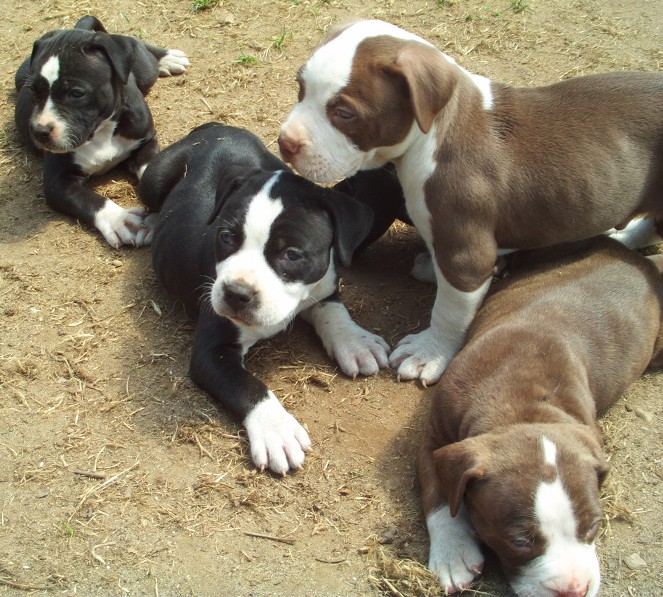
Love: abstract, confusing, unbounded, concrete, limitless, deep, and mysterious. The power of love is hidden within what even seems to be the darkest moment. What Ward is trying to tell her reader's is that love can always be found, love can always be molded, and love can always have a different perception of meaning. Just in the fist chapter, readers can identify the various ways that love is portrayed within the story. China, the "goddess" pitbull who gives birth to a ray of plentiful spotted pups, surprises Erech with her unusual instinct of love. "China is licking the puppies.  I've never seen her so gentle. I don't know what I thought she would do once she had them: sit on them and smother them maybe. Bite them. Turn their skulls to bits of bone and blood. But she doesn't do any of that." Slowly, Erech is convinced that China does have a nice bone in her body. As for herself, Erech has a more lustful perception of love on her mind. Manny. As Erech quotes, "Even though I knew all the other boys, I knew him and his body best: I loved him best." Erech's lust for Manny lurks in the word, best. Can a girl so young really love someone only having a tie of lustful experiences she's made with her brother's friend? I think not. But I do believe Erech loves Manny. She cares for him. And as a friend, she loves him. Simple. And given this visual piece from chapter one, a reader can see just how obtuse the meaning of love is. I may ask myself , 'what is love,' and give a whole bunch of gibber of words to try and answer the question. Love is peace, respect, patience, modest, worthy, painful, doubtful, farfetched, pointless, dumb, unbearable, and (typically spoken from the famous words of a teenage girl) love is "I just can't deal!!" Ward is trying to show her readers the open boundaries that love can have. And it's beautiful.

Mother's Love.

I found that Mama's love, more than any other variety, is the most present in Shaliyah's life.

Having died in the second paragraph of the novel, it would be understandable to mistake Mama for a secondary character. But Mama's love echoes throughout the following thirty seven pages and serves as an intangible link with Shaliyah, a sort of omnipresent sounding board. This is especially noticeable whenever Shaliyah is excluded. For example, when the boys are playing ball Shaliyah is left aside to wash bottles, Mama keeps her company: "My hair laid on my neck like blankets my mother used to crotchet, the ones we still piled on in the winter to keep warm"(p11). Again, almost immediately, while he is attending to her cut, Shaliyah identifies the company of Mama's love in Randall:"It was always what mama told us to do when we went running to her with a scrape. She would push and blow at the wound after putting alcohol on it, and when she'd stopped blowing, it wouldn't hurt anymore. There. See? Like it never happened"(12). And yet, despite this, Randall abandons his role as the maternal healer after cut has stopped bleeding-"The glimpse I saw of mama in his mouth was gone" (12)- and Shaliyah quickly realizes that, while Mama's love is a constant in her life, her brothers and her father may not even acknowledge its existence.

Salvage the Love


It is evident from the first time we hear about Manny from Esch, that she has a crush on him. When she first becomes aware of his arrival to The Pit in the story, she mentions that the sight of him “breaks the cocoon of her rib cage and makes her heart want to fly.” As the chapter progresses the feelings she experiences for him become more prominent. During her internal monologues, her thoughts always turn to Manny. So much so that even with multiple obstacles in her way, like her dads truck being parked by the front door or Junior hitting her in the leg with a shine bottle, she still looks at Manny first. Even when she accidently cuts herself after dropping a bottle her thoughts first go to Manny, worrying about him seeing her act vulnerable.  She even refers to Manny as “Gold” at one point. Esch is clearly desperate for Manny and will do anything to have him. She does not have a real relationship with Manny that isn’t a physical one. When around his friends, Manny barely speaks to Esch. Even when they are together physically he will not kiss her, which is arguably one of the most intimate moments a couple can have.

Her desperate desire to have Manny clouds her judgment. She gives herself to him and many other boys in a futile attempt to experience love.  It is clear that she is trying to emulate the Greek Mythology book that she has been reading. She even refers to how Manny loves her like Jason. Jason was a hero of Greek Mythology,  the leader of the Argonauts and lover to the Sorceress Medea. To have a passionate love that lasts through the ages is her goal. She is so desperate to love Manny that she never for a moment stops to think about what Manny’s thoughts on the matter are. She is insistent on creating a relationship in her mind, that doesn’t exist, just so that she can experience some kind of “love.”

Shades of Love

Ward is showing that the common factor in a human life is love. No matter the circumstance love prevails, conquers, and also hurts. There is love between family, lovers, and animals in these two chapters and each one has a different dynamic. Knowing it is a book about Hurricane Katrina, it is obvious there is going to be great struggle throughout the novel. Love coming up so early as a theme could be foreshadowing how that later keeps them together through those hard times to come. I think Ward also used a technique to show love through images of color. Everything she describes has a touch of color and so does every type of love.
You can see that Esch really just has the need to feel loved especially in her relationship with Manny. "He was peeling away my clothes like orange rind; he wanted the other me. The pulpy ripe heart. The sticky heart the boys saw through my boyish frame, my dark skin, my plain face. The girly heart that, before Manny, I'd let boys have because they wanted it, and not because I wanted to give it. I'd let boys have it because for moment, I was Psyche or Eurydice or Daphne. I was beloved."

She also talks about a fond memory with her mother and describes her in colors."I can't remember exactly how I followed Mama because her skin was dark as the reaching oaks, and she never wore bright colors: no fingernail pink, no forsythia blue, no banana yellow."

The way Ward adds color to a character also shows their personality and almost works as a sort of aura to understand the person. Colors are associated with feelings and among those is love.

Strange Love


Jesmyn Ward’s, ‘Salvage the Bones’, allows us to explore different perceptions and notions of ‘love’. She presents various different scenarios to help us explore the ‘love’ concept.  From Esch’s narration, there are many relationships to study out in which love plays out differently in various curious manifestations. The ways in which love is seen in the first chapter are expected and unexpected, understandable and thought-concerting. The main relationships that were focused on in the first chapter were that of Skeetah and China and that of Esch and Manny.

Skeetah obviously adores his pitbull China as he stays by her side throughout the entire birthing and after-birth process. Now China doesn’t seem to take well to any of the other family members and not to mention she’s an aggressive pitbull which makes her seem not quite the charmer, and so it’s a wonder that Skeetah has bonded so profoundly with this dog. Perhaps such a love is stemmed from deeper parallel issues. Skeetah perhaps sees some aspect of himself, some part of himself that doesn’t quite conform to everyone’s expectations, or doesn’t feel like it quite fits in with everything around him and in this way he shares a commonality with China, and is thus protective of China, of the part of himself that he sees in China. The care that Skeetah gives to China far exceeds any affection that he shows towards anyone in his family thus far in the book.

When we think of Esch’s mom dying just after giving birth to Junior, we cannot help but to think of this massive force of love flowing into Junior, “Mama’s last flower’, as she gives the birth her all, literally. She pushed her very last ounce of life into Junior. It’s this absolutely beautifully powerful expression of love ,although it may seem a bit morbid to think of it in this way.

When it comes to Esch, we see that she is absolutely bonkers about this Manny kid and she describes him as ‘gold’and as ‘the sun’. At the sound of him she becomes this wild thing and her soul breaks loose, but is this love? Can such a debilitating crazy emotion that takes away her ability to function any much beyond obsessive thoughts of him, be love? I don’t know; but I’m sure Esch would say that she loves him. It seems to be a complex spectrum of emotions that Esch experiences in regards to Manny. She says that she gives herself sexually to Manny because she wants to. But why does she want to? Because he’s beautiful and she’s flattered and bewildered that such beauty would choose her again and again? That such is the reasoning behind her sharing her body with Manny, we can infer that she has a lot of self-doubt and lacks self-love. (she imparted that she sees her hair as her one good thing on one occasion)  Maybe her ‘loving’ Manny is actually about her. She loves feeling desired by him, who stands as her epitome of beauty. Her ‘loving’ Manny is actually her ‘loving herself’ and loving what Manny’s desire for her does for her ego. In closing off this scene with Manny, Esch says ‘I was as bold as a Greek; I was making him hot with love, and Manny was loving me.’ That line seems to further support the point that this was about the ego boost that Esch got. During sex with Manny, when Esch thinks ‘It will be quick’, we get the impression that she wants it to be over with rather quickly but then she turns it upside down when she says she wanted him to lean down and touch her everywhere. Later when she goes to bed she’s wrapped up in thoughts that all prioritize Manny’s thoughts of her (For example, ‘How he sees me with his body’) as opposed to her view of Manny. She seemed to be more fascinated with that Manny was interested in her than that she was interested in him. This again would hint towards the love of ego, as opposed to love of Manny idea. So far, I’m finding the true nature of Esch’s feelings towards Manny to be a bit elusive.

Randall seems to be of very loving character and is probably the one who is the closest to picking up Mama’s role in terms of nurturer and in displaying care. I get that from the way Esch saw Mama in him when he was tending to her cut hand and from the way he carries Junior to the bathtub.


While there are certainly very interesting love dynamics throughout the first chapter, I’m anticipating further insight (especially on the characters who were barely explored in this chapter) in the upcoming chapters.

Love's Different Meanings in Salvage the Bones

In the first chapter of Salvage the Bones, Ward makes love an overarching and recurring theme. Other prominent motifs in the first chapter include those of birth and the possibly symbolic use of color. Ward seems to play with love as a complex concept: unconditional love of family, love as lust, and love of a sport or pastime.

            The family of four siblings and single father seems to function like a well-oiled machine, with each family member having a role to play. Daddy is the captain, keeping the family prepared for the possible storms. While we don't know of his affection for his children, Ward alludes to Daddy's love of drinking. Randall loves basketball and being with his friends. Skeetah loves China and his self-appointed role as breeder. Junior loves escaping to his space under the house.

            Esch seems to confuse love with lust, as she is deeply infatuated with Manny. She enables this unrequited love with Manny every time she allows him to unaffectionately have his way with her. Esch reveals that she easily gives herself to other boys, but she has placed Manny on a pedestal. She often associates Manny with the color gold. At one point she says, "He was the sun" (p. 16). This shows that in Esch's eyes, Manny can do no wrong. We see that even though Esch realizes that Manny will never kiss her, she idealizes their purely physical relationship. It is at this point that we see that Esch doesn't just idealize her flings with Manny, she idolizes Manny--To Esch, he is otherworldly, a god.


Themes of Love

From the onset of Salvage the Bones, Ward begins to convey her message that the power of love can help us overcome even the most daunting of challenges. Every member of the family has a love for something helping them cope with the rougher living conditions they face. For Skeeter, it's his overwhelming affection for China, while China has endless tough nurturing love for her litter of new puppies. Esch has her infatuation with Manny, her father has his addiction to drinking. All of the members of the family, as well as those who have come to be part of the household, have a familial love for each other.

Each type of love is felt and recieved differently, however they are similar in the sense that the individual doing the loving would go to extreme lengths to defend their loves. Skeet, Esch, the father, China, and the family as a whole may feel different ways about the subjects they love, but if something would ever occur to the receiver of their affections, they would all turn into fierce fighters, protecting what they feel is theirs. If anyone even spoke of harming China, Skeet would go to any length to protect her. Similarly, even though Esch's affections are one-sided, she loves Manny so much that she would protect him just the same. If anyone, even Skeeter, tried to mess with one of China's puppies, she would tear them apart. They all protect one another in the family.

The power of love makes people do crazy things, like Skeet buying the most expensive dog food when money is scarce, Esch hanging on to Manny when she knows he feels nothing of what she does, or the father drinking his days away when he should be working and saving the money he spends on alcohol. Their familial love is what keeps them glued together as a unit, together facing their challenges. Ward makes it very clear from the beginning of her novel that it is love that will push the family to overcome the looming obstacles and fight to survive.

Love Knows No Boundaries

Salvage the Bones is a story that is full of complex emotions. The predominant emotion that Ward explains to us in the first section is the feeling of love. This kind of love that Ward incorporates in the story is much stronger than the normal family love or relationship love; it goes further beyond that because it is, I believe, the driving force that keeps the family close and strong. Esch and her brothers are always watching out for each other and making sure they are safe, no matter the circumstances. The other form of love in this section is the bond between Skeet and his dog, China. Even though Skeet trained her to be a fighting dog, he still loves and treats just like a human being. He will do anything and everything for her; anything from helping get give birth,  buying the most expensive dog food. A love that goes just as far as the bond between China and Skeet is the love that Esch has for Manny. The way she feels and thinks about him is far beyond the normal "teenage love". She always looks at him like he "was the sun" (Ward 16). Even though there are different ways that love is being shown amongst the family, one thing is for sure: these forms of love are too strong to be broken. 

Wednesday, August 27, 2014

Variety of Love

Salvage the Bones has many love components tied into the storyline. The love Ward writes about is not like a normal romantic novel, she writes about the unconditional, sacrificing love, the kind where you look past a person's flaws. Living in the Pit is different than the average home. Skeetah found this pitpull, China, who is now his champion fighting dog. It's no secret that money is low around the pit, but Skeetah spoils his dog. He buys her the most expensive dog food and makes sure everything around her is perfect. Yes, China brings in money, but I think with or without money Skeetah would sacrifice for that dog. Everyone in the Pit looks after each other, especially family. They all watch out and protect each other because their it's is an unconditional love that will always be around. Finally, there's the love that makes you blind to someone's flaws. Esch seems to think she loves Manny and she wants Manny to love her. She compares their relationship to ancient mythology and describes the feelings she gets when she's around him. Esch ignores Manny's flaws, including the fact that he rarely speaks to her and is unfaithful to his "girl", Shaliyah. Esch ignores these personality flaws and continues to have a deep attachment towards Manny. Finally, the love that Daddy receives. Daddy is an alcoholic. It does not sound like he has a job, but does make money. It's obvious Junior hangs around Daddy and wants attention, considering that Junior is only 7, that is completely normal. Daddy is still the man of the house and definitely receives some degree of love and respect from his children, despite the fact that he can mean a careless, mean drunk.The love in Salvage the Bones is complex, but powerful.

Different Degrees and Types of Love

In this first section of reading of Jesmyn Ward's Salvage the Bones, there are various sorts of love that are presented; what I think that the author is trying to show by that is that love can occur in varying degrees, as well as types. In my initial reading what really stood out to me was the level of reverence the main voice, Esch, had for her deceased mother. Even the way Esch described her mother's last action of giving birth to Junior is described with a level of reverence, Mama giving birth to a "hydrangea: Mama's last flower." I found the natural imagery striking, especially how I see it from Esch as translating to feelings of love; the way that Esch's mother treated her last child, "lightly with her fingertips, like she was afraid she'd knock the pollen from him, spoil the bloom," almost carries over into the way that Esch perceived her mother, even after she was gone. Esch describes her mother, "she moved and it looked like the woods moved, like a wind was moving past the trees," which to me as a reader, shows that the kind of love that Esch is capable of is a sort that is very natural. The way that I see the love shared between Esch and Manny at this point in the novel is perhaps unrequited on her part. I only see Manny as using Esch for her body, which she is totally willing to give up to him. In the way that Esch's love for her mother is tied to nature, I see Esch's love for Manny tied to biology: phrases like "licking...the heat of his sweat, our waists meeting," or "I drift off with Manny's breathing in my brain," lead me to this supposition. Esch even says that Manny sees her "with his body."
Outside of the love Esch possesses, I find the love shared by China and Skeetah interesting. Skeetah is really the only person China is shown trusting, and in return he is overly involved in her well being, even going as far as sleeping with her in the shed outside, in what is described as spooning. Whether this is because of the monetary gain she offers him through her pups or just because it is a relationship between a boy and his dog was a point of interest for me as well. I feel like Skeetah is also so involved with China because it was described that she was the first dog he had that really had survived, and he took special care to make sure that she had the kind of food she wanted and she was well taken care of. Skeetah was also concerned for China and her puppies, which is another sort of love, one that is natural and animalistic. She is not completely knowledgeable of how to care for her litter, but at the same time is fiercely protective of them, growling at anyone other than Skeetah (and even he too, at times) when they get too close to her pups. That develops the love between Skeetah and China, because it creates a new level of dependency between the boy and his dog.

Mississippi Red

In the first two chapters of Salvage the Bones, Jessmyn Ward uses a lot of color imagery.  Though now uncommon for authors, this caught my attention, for Ward uses mostly the same three colors: red, orange, and gold.  On page two, when describing Junior’s birth, Ward refers to Junior’s body as “purple and blue as a hydrangea” (Ward 2).  This is the only time in the first two chapters that anything is described using cool colors.  There is an aura of red over everything.  China’s first puppy is described as “Mississippi red” which is the color of deep red Mississippi dirt (this red dirt also comes up several times, such as when Esch first vomits in it) (Ward 8).  The other puppies are some combination of black, white and orange/red, with the exception of the runt, who has “stripes of black and brown” (18). The colors orange and gold are overwhelmingly associated with Manny.  His face is described as “golden red” (Ward 9).  “His once white Jordans were the color of orange sherbet” (Ward 15).  Esch describes seeing Manny as seeing gold.  He removes her clothing “like orange rind” (Ward 16).  There are also several mentions of blood in these two chapters: first, the birth of Junior, second the birth of China’s puppies, third Esch cutting her hand on the broken glass, and finally the car accident.  There are several possible implications of these predominant warm colors.  They could suggest a hellish environment, both in terms of Mississippi summer heat and general malevolence.  Or this could circle back to the original prompt and represent an all-encompassing love that constantly surrounds and affects the characters.