
Thursday, September 4, 2014
Memories that Guide

feMALE- "woman problems"
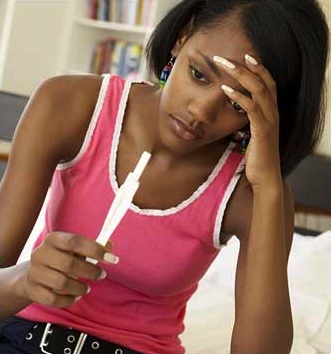 Gender plays an extremely important role in Salvage the Bones. The major conflict right now is Esch’s pregnancy, the storm coming, and all of the problems with China. All of these have to do with being a woman or female. Esch is not seen as “strong” by her brothers, father, and Manny.
In fact Manny doesn’t see her at all because she is just another girl he has slept with to him. “I want him to grip my hand like he grips the dark beams over his head, to walk with me out of the shed and away from The Pit. To help me bear the sun. To hold me once he learns my secret. To be different.” Manny has proven to be her weakness throughout the story.
I think the only time Esch does feel alone is when she has to deal with something that is a “woman’s problem.” Such as men using her for sex and then getting pregnant because of this. The expectations for the men as seen through her father don’t seem as harsh. They are expected to provide for their family but so are the women.
Even though she is treated the same as the boys and seen “as one of them”, her problems happen because she is a woman. Her pregnancy might have been prevented had she had another strong woman role model in her life.“Say that this is what you do when you can’t afford an abortion, when you can’t have a baby, when nobody wants what is inside of you.” It seems in Bois Sauvage the expectations are not high. Maybe having sex and kids early on is the norm in this community and she knows no better. She does not aspire to be something more because there is no one to show her that possibility.
Gender Explored

I feel like gender roles in Bois Sauvage, as seen from
Jesmyn Ward’s ‘Salvage the Bones’, aren’t clearly traced or spelled out. There
aren’t many direct gender role mark-offs.
There are, however, a couple scenes that take us into the characters minds and
allow us to explore how the sexes view each other.
Esch, in one scene,
shares that she imagines that the way love works is that her husband would build her a house
the way her dad did for her mom. So we
see her idea of a good man’s role being to provide security and the physical
needs in life for his woman. We can also
infer from her constant refuge in her superwoman alter ego, Medea, that she has
received rather negative subliminal messages regarding her sex, womankind. That
she has this persistent desire to be so yang and intensely fierce to totally
isolate herself from any chance of being perceived as weak, just provides
evidence of the mental conditioning and the notions that she has received about
women.
Manny comes across as
sort of misogynistic in the way he seems to have that air of superiority to
women, Esch in particular. He wants her
for nothing more than her body and his own carnal gratification. He is
portrayed as very selfish, and misogynistic - partaking in sexual
discrimination and objectification, and as one who feels very entitled . We get several glimpses into his
low-vibrational thinking processses. He argues with Skeet that China cannot
fight because she is now weaker than she was due to the fact that she’s now a
mother. So his suggestion is that motherhood serves as a weakness in women
rather than a strength. It’s not a very well pondered idea. The act in itself
of giving birth requires a strength, a
resilience and the Batiste boys know this from their very resilient mother.
Manny complained about Shaliyah not washing his clothes, as though a woman’s
role is to do a man’s laundry. He also is cheating on Shaliyah! Need I say
more?
We don’t see the Batiste boys interact with much women but
we definitely get the feel that they are respectful of women. We see Randall
displaying yin qualities in the way that he nurtures his siblings, Junior most
of all. We also see Daddy tuning into his intuitive feminine energies when he
says that he feels it in his bones that a storm is coming. He makes the remark
that the storm is a woman and that thus it is the worst kind. I didn’t get a
chauvinistic vibe from the way he said it. I got more of a ‘women burn with a
powerful strength and capability’ feeling from it. That showed the sort of
reverence that he has towards women. Besides that from Esch’s narration it
would seem that he was very affectionate toward his wife and wasn’t much
focused on clearly delineating roles as much as simply loving her. (Although
Esch hearing her dad say that and considering her dad wasn’t exactly the
affectionate type, probably interpreted that as that she, by being woman, was a
disaster.)
Overall, in the Batiste household, it seems that there is a
spirit of cooperation, and a ‘we’ll get it done together’ system of thought
rather than a dishing out of roles according to gender. I suppose this is because they are mostly males growing up
without much of a female presence since their mom died, and they had to abandon
any stereotypical ideas of what gender roles should be and become sort of
gender-neutral. They have a sort of harmonious flow in the way they operate and
get things done. They love each other
and aren’t primarily a gender to each other, they are rather essentially FAMILY
to each other.
How Gender (or Being Female) Affects Esch
In Bois Sauvage, Esch is justified in feeling “alone as the
only girl” because of the ways her gender has affected her life, and the sorts
of expectations that are imposed upon her because of it. Certainly Esch isn’t
literally the only girl, but she is the only one facing the sorts of
predicaments that she does in the course of Salvage
the Bones. And while expectations based on gender don’t make an overt
appearance in the novel, they are still present in undertones of language or in
the actions of the male characters.
Specifically regarding Esch and at the way that gender works
in her life, it is important to examine the ways in which she interacts with
the males around her, and how those relationships influence the ways that
gender roles are portrayed in her life. But it is also important to study in
regards to the gender expectations imposed on Esch the ways in which other
females may shape the way she view her gender and her roles because of it.
Esch suffers from self-esteem issues seen throughout the
course of the novel so far that occur internally having to do with both her
physicality and the way she carries herself. Manny’s girlfriend has a huge
effect on Esch in regards to femininity, because she has Manny’s “love” where
Esch does not. That is a point of contention with Esch in terms of her own
womanhood. Esch is willing to give Manny whatever he wants, even if it is
detrimental to her own well-being, because as a female, she thinks that that is
the way to obtain the affection of a man. The most influential woman Esch ever
had in her life was her mother, who she lost when she was young. All that Esch
has to influence the role her gender takes on in terms of womanly behavior are
the things her mother did, or the lessons her mother taught her and her brothers.
That being said, Esch’s role amongst the men in her family
is slightly muted, with her being the only girl. There is a presence of sibling
love, as friends, but certainly as caretakers also. Esch remains outside of the
circle of her brothers and their friends because of her sex; she cannot be
fully included like one of them because of her otherness. While her brothers
love her – see, Randall’s treatment of her cut hand, or Skeetah’s concern as he
suspects her pregnancy – the brother’s friends have used her body for sex.
Which leads to the role Manny’s relationship with Esch,
which is really more of a manipulation, has on Esch’s view of her expectations
as a female. As society has objectified women, so too does Manny with Esch. He
reduces her to nothing but a sexual object and ignores her completely as a
person outside of their private interactions in which he uses her.
Gender in Bois Sauvage
It is understandable that Esch feels alone because she is the only girl in the Pit. The only other female is China, and sometimes, she Esch wishes that she could talk to her so that she could talk about things such as motherhood and pregnancy. No one else in the Pit would be able to have such a conversation because they are all males. In Bois Sauvage, I believe that the male and female characters are similar when discussing strength. Esch's mother was a strong woman. She endured the pain of giving birth to Junior, and even in the condition that their family is living in, she was able to provide for everyone without giving up. Even though Esch doesn't show any signs of being able to be strong and stand up for herself like her mother, we can see that she has the potential to be strong as her character develops by hearing her thoughts and feelings toward other characters. But, considering the fact that she doesn't physically show any obvious signs of power, she continues to be overshadowed by the male characters, more specifically, Manny. In this novel, female expectations are not similar to the expectations that the males have. Females are perceived to be submissive and timid. also, to provide for the family and do the house chores. On the other hand, the males are supposed to do the heavy lifting in the family; to provide and protect his family. Esch's father does fulfill the role of a man by preparing the house for an incoming hurricane to protect his family. Esch does some of the housework, such as cooking and cleaning, and she also shows signs of being submissive; primarily when she engages in sexual activity. Even if the characters meet the expectations of males and females, the characters are not limited to them. Esch is moving toward being less submissive, and also, she is showing signs of becoming mentally stronger.
Salvage the Myth
Esch’s fascination with
mythology, though misdirected, still has its place in the story. While Esch doesn’t necessarily relate to
Medea, the character she idolizes, there are still strong mythological
connections to be made.
Though Esch identifies with Medea, thus far she seems to
more closely resemble Persephone, who was kidnapped by Hades and remained his
wife. Persephone’s character is always
described as passive, going with the flow.
She marries Hades after he kidnaps her and doesn’t really have a problem
with it for very long. Her role in the
story is as the object, and never the subject; things are always happening to
her and around her, but she herself doesn’t do much. However, I don’t think this will be her role
for the entire story, because we can always feel Esch’s character getting
stronger.
Another character who resembles someone in myth is Daddy,
who takes the role of Cassandra in the story.
He knows that hurricane Katrina is going to be bad, but no one believes
him. But we as the audience know, before
the story starts, that Katrina will be devastating. The severity of Katrina is the Cassandra
truth of the story, and Daddy is the only character to see it. Moving away from the mythology angle, Daddy
could also be viewed as the Shakespearean fool of the story. The Shakespearean fool, often a drunk, speaks
mostly in bumbling nonsense, but there is always hidden truth in what they
say.
Gender Struggles in Bois Sauvage
Gender roles and gender perceptions are a prominent theme in
Salvage the Bones. Esch is a complex character, as she is smart, sexual, and at
times maternal. She plays the roles of daughter, sister, friend, lover, and
philosopher. The reader sees that Esch has stepped up, consciously or
subconsciously, to the role of mother within her family. She partakes in the
stereotypical activities of housewife as she cooks, cleans, and monitors the
wellbeing of her family members. While Esch wears all these hats, she also
defies stereotypes of women as passive or submissive. It seems that in her
flings with the local boys that she has been the aggressor. This shows that
Esch doesn’t just stand by and let things happen to her—she is active in making
concrete decisions.
While Esch is a strong woman, she has a weakness—Manny. It
seems that Esch’s love of Manny defies all logic. Here, gender role
expectations come into play. Esch expects Manny to eventually fall for her,
while Manny expects Esch to be as detached from their “sexcapades” as he is.
Esch enables and facilitates this fling, disregarding the fact that Manny is a
taken man. For some reason, as smart and thoughtful as Esch is, she doesn’t
seem to mind being second to Shaliyah. Esch’s relationship with Manny is also a
sign of her age. Esch makes the mistakes of a young girl with a crush, but must
now face the responsibilities that come with motherhood.
There is a definite struggle between the concept of females
as strong versus weak. Where Manny makes reference to motherhood causing
weakness, Skeetah believes that motherhood makes a woman stronger and more
powerful. We then see that Daddy fears the hurricane more when he finds out
that it’s named after a woman. Daddy says, “The storm, it has a name now. Like
the worst, she’s a woman” (p.124). Here we see Ward playing with the idea of
womanhood being equated to destruction. This statement is an insult to women
but it lends power to the notion of being a woman.
Subscribe to:
Posts (Atom)